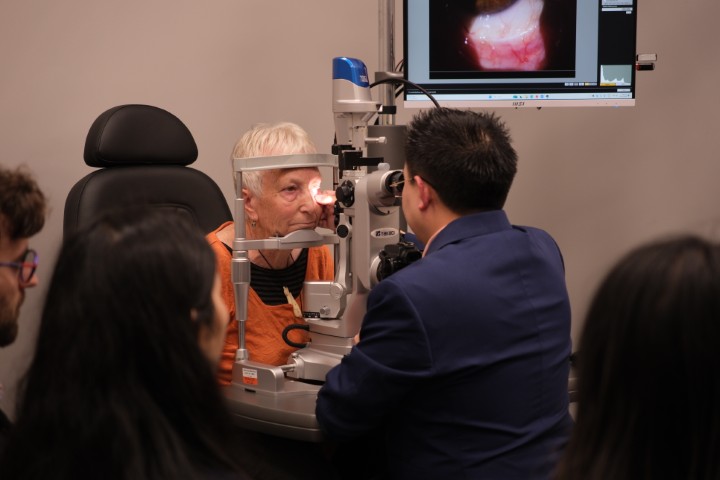







A University of Auckland analysis suggests allocating 1.2% of Aotearoa’s health budget to community eyecare, similar to Australia’s public funding model, could fund 2.4 million eye examinations and 60,500 pairs of glasses.
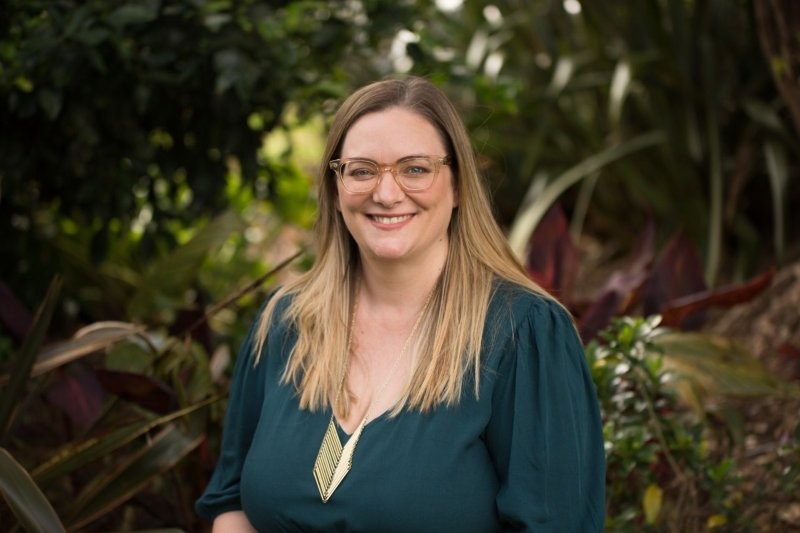
The purpose of this work, published in the Journal of Primary Health Care, is to increase the available evidence describing Aotearoa’s eyecare needs and to provide a starting point for a broader conversation about funding community eyecare, said SOVS research fellow and co-author Dr Lucy Goodman. “It is a ‘back-of-the-napkin’ analysis that intends to stimulate a conversation between optometrists and policy makers, particularly at a time when budget decisions are imminent.”
Financial support options in New Zealand are currently limited for people needing help to access eyecare. Children of Community Services Card holders can access up to $287.50 for an eye test and glasses via Enable New Zealand*, while people on low incomes can apply for a $280 loan from Work and Income New Zealand. Spectacles for adults are not currently available in the public sector.
Across the Tasman, comprehensive optometric eye examinations are available to all citizens and permanent residents under the Medicare scheme and state-funded subsidies exist to support specific population groups to access spectacles.
Using the Australian model as a comparison, the SOVS team also calculated the costs of providing targeted funding for specific groups of people, such as Community Services Card holders or Work and Income recipients.
The researchers’ analysis suggests $89 million could subsidise approximately 760,000 examinations for Community Services Card holders, who are most likely to face financial barriers. “Just $37 million would fund eyecare for children under 15 years, aligning with universal dental and GP services for this age group. At the other end of the age spectrum, around $166 million per year would support eyecare for older adults, who have the greatest need,” Dr Goodman said. “This investment would arguably be more effective than the $61 million proposed within the 2020 health budget to fund one-off ‘eye health checks’, for which there is no evidence of population-level benefit.”
Co-author Associate Professor Jacqueline Ramke said the analysis begins to explore which solutions could move New Zealand closer to equitable eye health access. “Uncorrected refractive error is the leading cause of vision impairment globally and probably in Aotearoa; the Diabetes and Sensory Health study currently underway will provide confirmation on this. Yet, refraction services for adults are unavailable in the public sector.”
Funding community eyecare would also result in early detection and treatment of preventable eye disease, potentially delivering long-term benefits for both individuals and the health system, Dr Goodman added. She said this would elevate optometry to the level of other comparable allied healthcare services.
Commenting on the research, Renata Watene, president of the New Zealand Association of Optometrists, said access to primary eyecare, particularly for priority groups facing financial barriers, remains an important and ongoing issue. “Optometrists are the primary providers of eye healthcare and should be recognised as the leading solution for delivering preventative, community-based services that improve access, reduce inequities and support better long-term eye health outcomes.”
Ultimately, Dr Goodman said addressing health inequities would require more than simply subsidising existing services; it would have to consider how services are delivered. To that end, SOVS is working on several projects exploring ways of alternative eyecare-delivery models aimed at improving access for people who face barriers to care, particularly Māori and Pacific Peoples. “There are already promising examples in Aotearoa and Australia that show how this could be done, providing useful models to build on,” she said.
*Current funding delivers eyecare services to 25,000 children for about 0.02% of the health budget.