


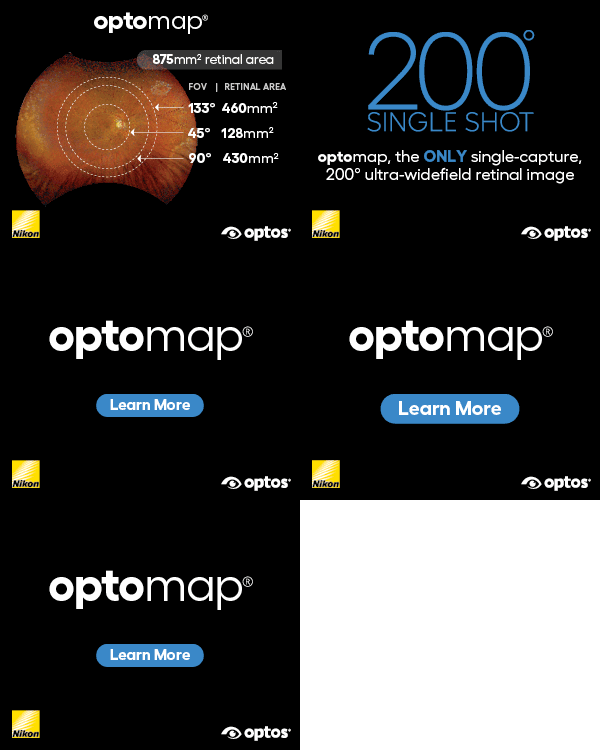



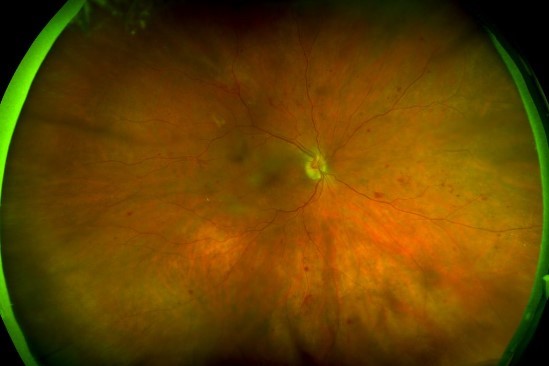
Two separate US studies found diabetic retinopathy (DR) diagnosis and grading were more accurate and consistent using ultra-wide field (UWF) fluorescein angiography (FA) compared to UWF colour fundus and red-free (CF/RF) imaging or slit lamp biomicroscopy.
Researchers at the University of Illinois at Chicago surveyed 10 experts asked to diagnose and manage 20 DR cases, first based on UWF CF/RF images alone and again with UWF CF/RF images and a corresponding UWF FA. Experts were also polled on their diagnostic confidence, their use of FA in practice and their opinions on the value of UWF FA in the cases presented.
Researchers found UWF FA increased diagnostic sensitivity from 36% to 69%, while inter-grader agreement and expert confidence (38% vs. 65%) also improved. In 39% of responses management changed from observation to treatment.
In a separate prospective randomised study, researchers at the University of California San Francisco imaged 900 eyes of 450 DR patients using slit lamp biomicroscopy and ultra-widefield imaging. Ultra-widefield photos were independently graded by two optometrists.
Researchers concluded ultra-widefield imaging agreed substantially with standard-of-care examinations in a routine patient population and detected more fundus findings than clinical examination. A total of 187 findings were detected by imaging but not examination, compared with 42 that were detected on examination but not imaging.
Both studies were presented at the 2022 Association for Research in Vision and Ophthalmology (ARVO) Annual Meeting.